
Hand Tool Ergonomics - Health Hazards
On this page
What are the main health concerns in working with hand tools?
Back to topAlong with common injuries such as cuts, lacerations, and bruises, the frequent and prolonged use of hand tools can cause soreness, aches, pains, and fatigue. These injuries, which, when ignored, can lead to chronic musculoskeletal injuries (MSIs). The most common examples of these work-related musculoskeletal disorders (WMSDs) are tendonitis, tenosynovitis, bursitis, epicondylitis (tennis elbow), carpal tunnel syndrome and de Quervain's syndrome.
You can find prevention tips in the documents listed above, as well as in other OSH Answers documents, including:
What factors, when working with hand tools, can cause injury?
Back to topSeveral work factors can affect the health and performance of hand tool users. Major ones include:
- static load on arms and upper body muscles
- awkward working positions and body postures
- tissue compression
- vibration
Static load
Static load or effort occurs when muscles are kept tense and motionless. Examples of static effort include holding the arms elevated (Figure 1a), or extended forwards or sideways (Figure 1b). (Try holding your arm straight out in front of you for a few minutes. Put any object in your outstretched hand, and its weight will exponentially add to the static effort.) Bending and twisting the neck or the whole torso can also increase static load considerably. Add the exertion of force required by hand tools, and static load can increase still further (Figure 1c).
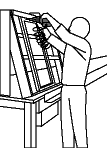
Figure 1a
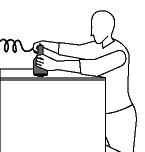
Figure 1b
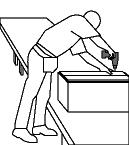
Figure 1c
Static effort, that is, holding any strained position for a period of time, is a particularly undesirable component in any work situation. Static effort increases the pressure on both the muscles, as well as on tissues, tendons and ligaments. It also reduces blood flow, which causes localized fatigue at a much quicker rate than would be expected by performing dynamic work (involving movement). Statically loaded muscles are much more vulnerable to fatigue and subsequent injury than muscles which are performing dynamic work. Furthermore, muscles which are tired by static work take more than 10 times longer to recover from fatigue.
Awkward working positions and body postures
Hand tools are often (actually, more than often) used where the space is limited and access is difficult; see Figures 2a, 2b, 2c.
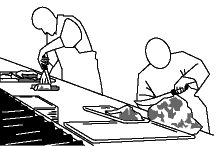
Figure 2a
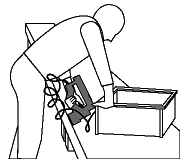
Figure 2b
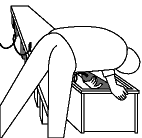
Figure 2c
When the hand holds and uses a tool in an awkward position, it has less strength and is consequently more susceptible to soreness and eventual injury. If the arm is uncomfortable, the rest of the body is likely to be so as well, because it is natural to compensate for discomfort by trying to re-align the body by bending the back, rounding the shoulders, tilting the neck, and so on.
Awkward positions of the upper body considerably increase the effort needed to complete the task. The resulting fatigue, discomfort, and pain add further to the risk of developing injury.
Tissue compression from forceful grips
Typically, using a hand tool requires a firm grip. The resulting compression of soft tissue in the palm and fingers may obstruct blood circulation, resulting in numbness and tingling. Blisters are also common due to friction between the palm of the hand and the handle of the tool.
Vibration
Certain heavy tools, such as a chipping hammer, can produce significant vibration, which is responsible for hand-arm vibration syndrome (HAVS), more commonly known as white finger or Raynaud's syndrome.
- Fact sheet confirmed current: 2023-09-26
- Fact sheet last revised: 2017-12-01