
Forklift Trucks - Daily Checks
On this page
When should an operator inspect the forklift truck?
Back to topAn operator should inspect the forklift truck every day, including at the beginning of each shift, and before using each time.
What does a daily inspection involve?
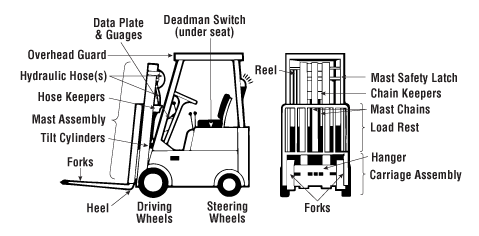
Back to topThe operator should carry out a visual check ("circle" check) before starting the forklift. After completing the visual pre-start check, the operator should do an operational pre-use check.
What should an operator inspect during the visual pre-use check?
Back to top- General condition and cleanliness.
- Floor – clear of objects that could cause an incident.
- Overhead – no obstructions.
- Nearby objects to avoid as you drive away.
- Fire extinguisher – present and charged.
- Engine oil level, fuel level, radiator fluid level (liquefied petroleum gas (LPG), gas, and diesel forklifts).
- Propane equipment – fuel tank mounting system, fuel tank position pin, propane relief valves and hose condition.
- Battery – fully charged; no exposed wires; plug connections not loose, worn or dirty; vent caps not clogged; electrolyte levels in cells is adequate; secured in place by holddowns or brackets.
- Bolts, nuts, guards, chains, or hydraulic hose reels not damaged, missing or loose.
- Wheels and tires – check for wear, damage, and air pressure, if pneumatic tires.
- Forks – forks not bent or at different heights; no cracks present; positioning latches in good working condition; carriage teeth not broken, chipped or worn.
- Chain anchor pins – not worn, loose or bent.
- Fluid leaks – no damp spots or drips.
- Hoses – held securely; not loose, crimped, worn or rubbing.
- Grease or debris in the operator compartment.
- Seatbelt and/or operator restraint device (if equipped) – belts and restraints work properly; no visible wear or damage; anchors, buckles, etc. function properly.
- Seat locks – in position
- Overhead guard, or roll over protection structure (ROPS) if present – secure with no damaged areas.
- Other guards – all guards in place and in good condition.
What should an operator inspect during the operational pre-use check?
Back to top- Foot brake – pedal holds, unit stops smoothly.
- Parking brake – holds against slight acceleration.
- Deadman seat brake – holds when operator rises from seat.
- Clutch and gearshift – shifts smoothly with no jumping or jerking.
- Dash control panel – all lights and gauges are operational.
- Horn – working and loud enough to be heard in working environment;
- Back-up (reverse) alarm and other warning devices are operational.
- Lights – headlights and warning lights are operational.
- Steering – moves smoothly.
- Lift mechanism – operates smoothly (check by raising forks to maximum height then lowering forks completely).
- Tilt mechanism – moves smoothly, holds the load (check by tilting mast all the way forward and backward).
- Cylinders and hoses – not leaking after above checks.
- Listen for any unusual sounds or noises.
Report any problems identified in daily check to the supervisor immediately.
Check with your jurisdiction for any requirements regarding frequency of checks, and maintenance. A list of Canadian government departments responsible for health and safety can be found here.
- Fact sheet last revised: 2019-02-18