
Metalworking Machines - Drill Presses
On this page
What should you do before using a drill press?
Back to topDrill presses can be dangerous if not used properly.
- Read the owner's manual carefully.
- Make sure you understand the instructions and are properly trained before operating a drill press.
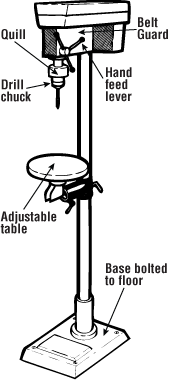
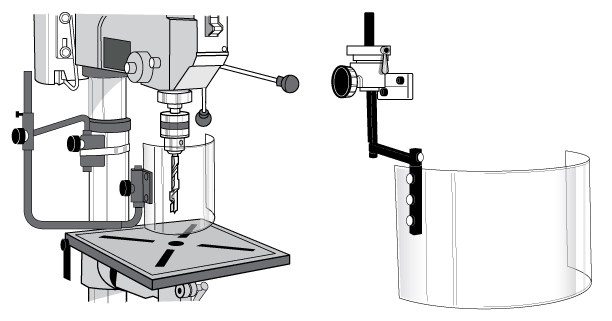
Refer to Metalworking Machines - General for basic safety tips.
What are some safe work practices to know when using a drill press?
Back to top- Wear appropriate CSA-certified safety glasses.
- Make sure that the drill press has a start/stop button within easy reach of the operator.
- Make sure the drill press has a working emergency stop button (e-stop).
- Make sure a guard, shield or barrier is in place and functioning properly before starting work.
- Use a vacuum, brush or rake to remove cuttings.
- Remove burrs and chips from a drilled hole. When making deep holes, clean out the hole frequently.
- Use a clamp or drill vise to prevent work from spinning.
- Make sure the drill bit or cutting tool is locked securely in the chuck. Remove the chuck key before starting the drill press.
- Lubricate drill bit when drilling metal.
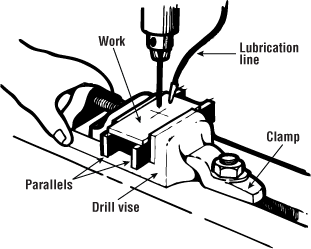
- Reduce the drilling pressure when the drill begins to break through the workpiece. This action prevents drill from pulling into the work and breaking.
- Keep drill bits clean and sharp. Dull drills are a common cause of breakage.
- Keep floor around the drill press free of oil and grease.
- Keep the working surface clean of scraps, tools and materials.
- Keep guards in place and in good working order.
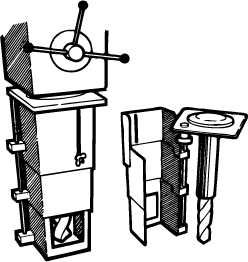
- Shut off power before removing the drill bit.
Refer to portable hand drills for additional information.
What are some things you should avoid doing?
Back to top- Do not wear any loose clothing or ties. Roll sleeves above the elbow to prevent them from being caught in revolving parts. Tie back or confine long hair.
- Do not wear gloves, rings, watches, or bracelets while working with a drill press.
- Do not set speeds, adjust, or measure work until machine is completely stopped.
- Do not force the drill with extra pressure.
- Do not leave chuck key in drill chuck. Make adjustments and remove key immediately.
- Do not hold work by hand when drilling holes; secure the work with clamps or vices.
- Do not place hands under the stock being drilled.
- Do not stop rotation of chuck and spindle with your hand.
- Do not remove a broken drill with a centre punch and hammer.
- Do not leave the drill press running unattended.
- Fact sheet last revised: 2019-01-03