
Metalworking Machines - Metal Saws (Cold)
On this page
What should you do before using a cold metal saw?
Back to topMetal saws can be dangerous if not used properly.
- Read the owner's manual carefully.
- Be sure all parts, wires and plugs are in good working condition.
- Make sure you understand instructions and are properly trained before operating a metal saw. Refer to OSH Answers Metalworking Machines - General for general safety tips.
Cold cutting saws include hand and powered hacksaws, band saws, and horizontal and vertical circular saws.
Hot cutting saws use an abrasive disc or large toothless (friction) circular saw. Refer to OSH Answers Metalworking Machines - Metal Saws (Hot) for information on hot metal saws.
What are some basic safety principles to follow?
Back to top- Wear CSA-certified appropriate personal protective equipment, including safety glasses and other required equipment (ex. footwear and hearing protection).
- Make sure the saw has a start/stop or emergency button within easy reach of the operator.
- Make sure that all guards are in place and working properly.
- Guard long material at both ends to prevent anyone from coming into contact with it.
- Make sure that the blade is completely stopped before removing the stock.
- Follow lockout procedures when performing maintenance work.
- Use cutting or lubricating fluid when cutting metals.
- Keep saw blades clean and sharp. Check blades regularly for wear or damage.
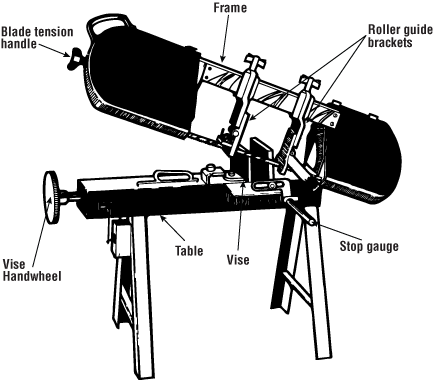
- Select the correct blade and saw speed for the material being cut. Follow the manufacturer's instructions.
- Use the stop gauge supplied with most cut-off saws when several pieces of the same length are required.
- Secure all work in a vise. Place the section to be cut such that the saw blade will clear the vise and table; however, do not place the section so far away from the vise that it will be unstable when being cut.
- Support long stock with a floor stand.
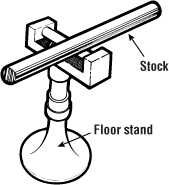
- Keep working surface clean of scraps, tools and materials.
- Keep floor around saw free of oil, grease and debris.
What should you avoid doing?
Back to top- Do not wear loose clothes and dangling jewellery during work as they may get tangled with rotating parts.
- Do not place, measure or remove work unless the saw is stopped.
- Do not apply extra force to the saw blade.
- Do not leave saw running unattended.
Refer to other OSH Answers for additional information on band saws and hand saws.
- Fact sheet last revised: 2018-12-18