
Metalworking Machines - Planers
On this page
What should you know before using a planer?
Back to topPlaners can be dangerous if not used properly.
- Read the owner's manual carefully.
- Make sure you understand instructions and are properly trained before operating a planer.
With a planer, the work table moves back and forth while the cutting tool is held stationary. A shaper operates similarly except that the work table is stationary while the cutting tool moves back and forth.
Refer to Metalworking Machines - General for basic safety tips.
What are some good work practices to follow when using a planer?
Back to top- Wear appropriate CSA-certified safety glasses.
- Make sure that planer has a working emergency stop button (e-stop) within easy reach of the operator.
- Use a vacuum, brush or rake to remove cuttings only after the machine has stopped moving.
- Make sure that all guards are in place and in good working condition.
- Make sure that stop pegs are in place on planer table.
- Secure safety devices at proper locations.
- Make sure that there is ample clearance between work and planer frame.
- Secure tool holder, tool and crossrail in their proper places.
- Make sure that feed rod and its attachment are in good working order.
- Make sure that power is on when using a magnetic clutch.
- Use proper cutting tools.
- Always set the depth of cut and the feed rate so they are appropriate for the tool and the piece being worked.
- Keep machine properly oiled.
- Keep floor around planers free of oil and grease.
- Keep working surface clean of scraps, tools and material.
- Use lifting equipment to move work to or from planers. Refer to Materials Handling for additional information.
What should you do when clamping work on the table?
Back to topMake sure that:
- clamps are located to properly grab work so it will not spring out of shape or alignment;
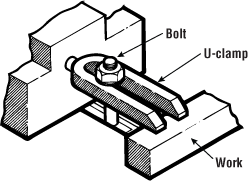
- fork end of U-clamp is on the work piece;
- bolts or nuts with stripped threads are discarded and replaced;
- work is mounted squarely.
What are some things you should avoid doing?
Back to top- Do not wear gloves, rings, watches or loose clothing. Tie back long hair.
- Do not make adjustments or measurements while planer is in motion.
- Do not leave planer unattended while it is running.
- Fact sheet last revised: 2019-01-28