
Platforms - Scaffold Use
On this page
What should you check before using scaffold?
Back to topInstall, inspect, maintain and repair scaffolding in accordance with standards, regulations, and manufacturer's instructions.
Check the following before using scaffolding and inspect on an adequate basis:
- the base is sound, level and adjusted,
- legs are plumb and all braces are in place,
- locking devices and ties are secured,
- cross members are level,
- planks are of the proper grade(s) of lumber and have no weak areas, deterioration, or cracks.
- planks, decks and guardrails are installed and secure,
- keep a log of inspections and related items or repairs.
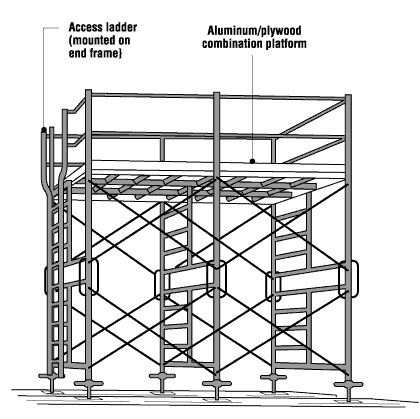
What should you do when using scaffold?
Back to top- Make sure all platforms above 2.4 metres (8 feet) are fully decked or at the height required by your jurisdiction.
- Use an access ladder, not the scaffold frame, unless it is specially designed to be climbed. Build a staircase if the scaffold will be used for a length of time.
- Build a rest platform for every 10 m (30 ft) in height beside the ladder.
- Remove snow and ice from scaffold platforms, ladders and access areas.
- Ensure that scaffold is securely attached to the building structure. Check requirements in the legislation applicable to your jurisdiction.
- Provide adequate ventilation for the work done inside the scaffold if the scaffold is completely hoarded. Note also that effects from winds increase when scaffolds are covered (hoarded).
- Make sure scaffold planks are in good condition and are cleated properly.
- Make sure the planks have an appropriate amount of overhang – too much and the planks may tip, and too little and the planks may slip off.
- Use all of the components required, including base plates, connections, braces, and securing devices (e.g., “banana” clips, “pig tails”, tie-ins, etc.)
- Protect all planked or working levels with proper guardrails, mid rails and toe boards along all open sides and at the ends of scaffold platforms.
- Replace any guardrails that were removed while hoisting materials. Wear fall protection until guardrails are reinstalled.
What should you not do when using scaffold?
Back to top- Do not use a scaffold without guardrails.
- Do not load in excess of its rated working load.
- Do not jump on planks or platforms.
- Do not force braces to fit. Level the scaffold until a proper fit can be made easily.
- Do not climb or stand on cross braces or guardrails.
- Do not work on scaffolds during storms or high winds.
- Do not use ladders or makeshift devices on top of scaffolds to increase height.
- Do not overload scaffold frames or platforms.
- Do not load in a way that affects its stability.
- Do not rest materials or equipment on guardrails.
- Do not try to repair bent or kinked frames. Throw them out.
- Do not work below a scaffold without head protection.
- Do not roll a scaffold while workers are on the platform.
- Do not use scaffolds near electrical wires.
- Fact sheet last revised: 2017-11-01