
Platforms - Suspended Work
On this page
What should you do when working on a suspended platform?
Back to top- Make sure that platform is installed and maintained according to job requirements, safety regulations, standards and the manufacturer's specifications.
- Inspect all equipment before erecting and before each shift.
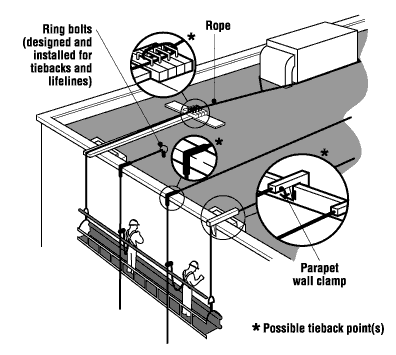
- Use appropriate fall arrest systems (e.g., a separate safety harness attached to an independent lifeline) for each worker. Maintain lanyard attachment at the highest point possible. If fall arrest systems are necessary, workers must be appropriately trained before use.
- Make sure that suspended platform roof beams and attachments are secure.
- Make sure that the roof or parapet wall is structurally sound to support either outriggers or cornice hooks.
- Check for kinked or damaged ropes.
- Secure all ropes at anchor ends.
- Make sure that all safety equipment, stops, override switches and brakes function properly.
- Prevent contact between welding or grinding equipment and wire safety or suspension ropes.
- Secure hand tools to the platform.
- Make sure that the power source is secured and properly grounded.
- Secure platform when not in use.
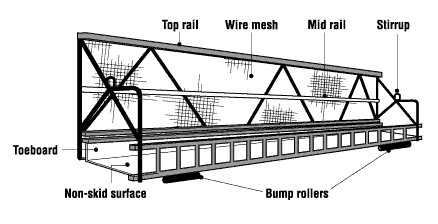
- Make sure that guardrails and toe boards are in place.
- Extend suspension ropes completely to the ground or terminate with wire rope clips to prevent the stage from running off the end of the ropes.
- Test by raising the fully loaded platform a few feet off the ground before going aloft.
What should you not do?
Back to top- Do not exceed platform load capacity.
- Do not enter or leave the platform other than at ground level or at other safe access points.
- Do not allow electric cables or connections to lie in gutters or other areas where water can collect.
- Do not work near exposed electrical circuits or equipment.
- Do not join platforms unless they are designed for this purpose.
- Do not use the damaged or defective equipment.
- Do not alter, substitute or remove components of the platform.
- Do not use fall arrest systems (e.g., the lifeline) for raising or lowering tools or materials.
- Do not move work platform unless all workers on it are protected by an appropriate fall arrest system.
- Fact sheet last revised: 2018-02-05