
Tractors - Maintenance
On this page
What are some safety tips to know when working on a tractor?
Back to top- Read, understand, and follow the instructions in the manufacturer's maintenance manual.
- Follow the manufacturer’s guidelines for maintenance and repair. Keep a log of all service and maintenance.
- Disengage power, lower hydraulics, and stop the engine before doing any maintenance.
- Remove the ignition key.
- Disconnect batteries before doing any electrical work.
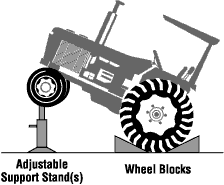
- Support equipment on blocks or stands. Do not rely on hydraulic hoists or cylinders. They are designed for lifting only and can fail without warning.
- Provide adequate ventilation when running an engine indoors. Engine exhaust fumes contain carbon monoxide — a colourless, odourless, and deadly gas.
- Use appropriate tools. Tractor maintenance requires wrenches and other tools that may be larger in size than those used for automobiles.
- Protect yourself from sharp edges and protruding parts. Wear gloves and cover sharp edges with tape or guards.
- Keep all guards in place. Replace damaged or missing guards or shields.
- Keep hands, feet and clothing away from moving parts.
- Adjust the right and left brakes so they are equal on the rear wheels.
- Check steering and control mechanisms, warning devices, lights and governors.
- Keep the work area clean and well-lit.
- Clean up spilled oil, grease or hydraulic fluid immediately.
- Remove all tools and parts before starting the engine.
- Do not start the engine, engage power or raise or lower an implement without warning other people in the area.
What are some safety tips for working with hydraulics?
Back to topImproperly maintained or adjusted parts can cause serious injury.
Always use caution when working on a hydraulic system. Even when the system is shut down, hydraulic oil can still be under very high pressure.
Before servicing:
- Lower hydraulic-powered equipment to the ground or block mechanically.
- Shut off the engine, which powers the hydraulic pump.
- Move the hydraulic lever back and forth a few times to release pressure.
- Let the hydraulic system cool down.
- Follow the manufacturer's instructions. Servicing procedures vary from one hydraulic system to another.
Hydraulic fluid escaping through pinhole leaks is difficult to see, but its high pressure can puncture the skin. Have a physician treat any hydraulic fluid skin punctures immediately.

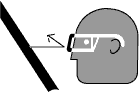
- Check for leaks by passing a piece of cardboard or wood over the suspected area.
- Relieve the pressure and replace the defective part.
- Fact sheet confirmed current: 2023-12-07
- Fact sheet last revised: 2017-09-12