
Tractors - Operation
On this page
What should you do when operating a tractor?
Back to top- Wear close-fitting clothes that are not frayed. Tuck in shirts, and tie back long hair.
- Use footwear with slip-resistant soles.
- Wear a seat belt when the tractor is equipped with ROPS (roll-over protection structure).
- If there is the risk of falling objects, install a fall-protective structure.
- Check to see that no one is near the tractor before starting the engine.
- Operate controls from the tractor seat only.
- Always keep three points of contact (two hands and one foot) when climbing on and off the tractor.
- Clean the tractor steps regularly to prevent slips and falls.
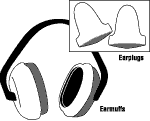
- Use hearing protection unless you are enclosed in a soundproof cab.
- Hitch loads to the draw bar only. Set the draw bar on a three-point hitch and no higher than the fixed draw bar. Use a draw bar pin which locks into place and is the right size for the job.
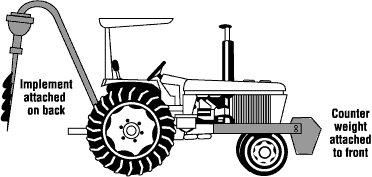
- Use counterweights (front end or wheel weights) to help keep the tractor stable when necessary.
- Engage the clutch slowly at all times.
- Disengage the power take-off (PTO) and turn off the engine before unclogging, adjusting or servicing equipment.
- Maintain safe operating speed according to surface conditions.
- Keep the loader bucket low while transporting loads
- Take breaks when working long hours. Be aware of fatigue. Never operate machinery when under the influence of alcohol, drugs, etc.
What are some safe driving tips?
Back to topAlways read, understand, and follow the owner’s operating manual.
Be properly trained to safely operate a tractor.
Do a circle check before operating a tractor or any vehicle.
Make sure your tractor conforms to the highway regulations when operating on public roadways.
Watch out for:
- stumps, logs, rocks,
- holes, ruts, cave-ins, excavations,
- ditches, embankments, ravines,
- people, machinery, debris, buildings, and
- overhead powerlines.
Slow down when:
- turning,
- driving near ditches, ravines, buildings, trees, posts, fences, people, or animals
- working on slopes or rough ground
- pulling heavy, high, swaying, or unstable loads
- driving on rough, soft or slick ground
- plants or darkness restricts visibility.
Engage the parking brake and put into park or neutral. Remove the ignition key before leaving tractor.
What should you avoid doing?
Back to top- Do not use a tractor unless you are trained and know how to operate it safely.
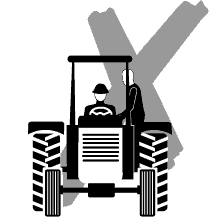
- Do not allow another person to ride on a tractor unless the tractor is designed to carry passengers (e.g., it is equipped with instructor seats, roll-over protection structures (ROPS), and safety belts).
- Do not get on or off a tractor while it is moving.
- Do not overload a tractor. Follow manufacturer’s instructions.
- Do not start the engine while standing beside the tractor.
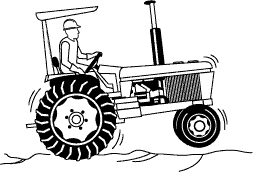
- Do not drive so quickly that the tractor wheels bounce.
- Do not move loads that are poorly stacked.
- Do not drive a tractor with greasy or slippery steering wheel.
- Do not idle a tractor inside a building.
- Do not drive a tractor up to anyone standing in front of a fixed object, such as a building, wagon or implement.
- Fact sheet last revised: 2021-01-25