
Woodworking Machines - Sanders
On this page
What should you do before using sanders?
Back to topSanders can be dangerous if not used properly.
- Read the owner's manual carefully.
- Make sure you understand instructions before attempting to use any tool or machine.
- Learn the applications and limitations before use.
- Refer to Woodworking Machines - General Safety Tips for general safeguards.
What safety procedures should you follow when using sanders?
Back to top- Wear safety glasses with side shields or safety goggles, or a face shield (with safety glasses or goggles) when operating a sander.
- Wear hearing protection that is suitable for the level and frequency of the noise you are exposed to in the woodworking area.
- Wear protective footwear when required.
- Use sanders with the local exhaust ventilation (LEV) turned on. The LEV should be designed for the sander and well maintained to work effectively.
- Wear respiratory protection (e.g., dust masks) where required, during sanding operations and clean up.
- Keep hands away from the abrasive surface.
- Hold small or thin pieces of stock in a jig or holding device to prevent injuries to the fingers or hands.
- Inspect abrasive belts before using them. Replace belts worn, frayed, or excessively worn in spots.
- Sand on the downward side of a disc sander so that the wood is driven onto the table by the machine's rotation.
- Enclose all drums, disk or belt sanding machines with an exhaust dust hood that covers all portions of the machine but the portion designed for the work feed.
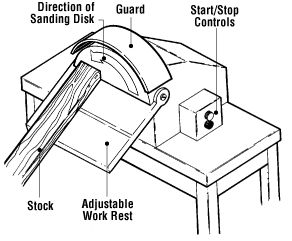
- Adjust work rests on all manually fed sanders to provide minimum clearance between the belt and the rest. The work rest should be secured properly.
- Install abrasive belts that are the same width as the pulley drum.
- Turn off the sander and unplug the electricity when making any adjustments or changes in the set up.
- Adjust abrasive belt tension to keep the belt running the same speed as pulley-drum when the wood is in contact with the belt.
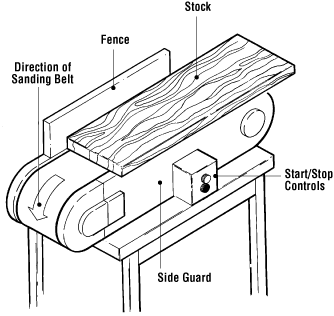
- Make sure fences and any other guards are properly adjusted and in place before using the machine.
- Guard feed rollers to allow boards to pass, but keep operators' fingers and arms out.
- Install guards to prevent contacts at:
- in-running nip points,
- power transmission,
- feed roll parts, and
- the unused portion of the abrasion belt on the operator's side of the machine.
What should you avoid when using sanders?
Back to top- Do not sand stock that has loose knots, splits, defects or foreign objects (e.g., metal, stone) in it.
- Do not sand small or thin hand-held work pieces.
- Do not wear loose clothing or jewellery while using revolving power tools. Tie back long hair or wear appropriate hair protection. These measures will prevent hair, clothing, or jewellery (like dangling neck chains) from being caught and pulled by sander belts and pulleys that are in motion.
- Do not operate sanders without the exhaust system operating.
- Do not operate sanders unless adequately guarded.
- Do not operate sanders unless the work rest is properly adjusted.
- Do not wear loose clothing, work gloves, neckties, rings, bracelets or other jewellery that can become entangled with moving parts.
- Fact sheet last revised: 2019-08-09